
The internet operates through a massive network of connected devices that communicate using standardized digital addressing systems. Every smartphone, laptop, router, website server, and smart device connected to the internet relies on an IP address to send and receive information. As public interest in networking and cybersecurity continues growing, unusual IP-related searches have become increasingly common. One example is 111.90.150.2404, a number sequence that appears to resemble a valid IP address but actually breaks important internet protocol rules. Many users search for this address after encountering it online, seeing it in logs, or confusing it with legitimate IPv4 addresses.
Although 111.90.150.2404 looks technical and realistic at first glance, it is not a functioning IPv4 address. The reason is simple but important: the final numeric section exceeds the allowed range required for IPv4 formatting. Despite being invalid, the address continues appearing across blogs, forums, server logs, search results, and networking discussions because of typing mistakes, data logging errors, automated indexing systems, and public curiosity. Understanding why 111.90.150.2404 is invalid helps users learn essential networking concepts related to IPv4 structure, internet communication, DNS systems, cybersecurity awareness, and digital privacy.
What Is 111.90.150.2404?
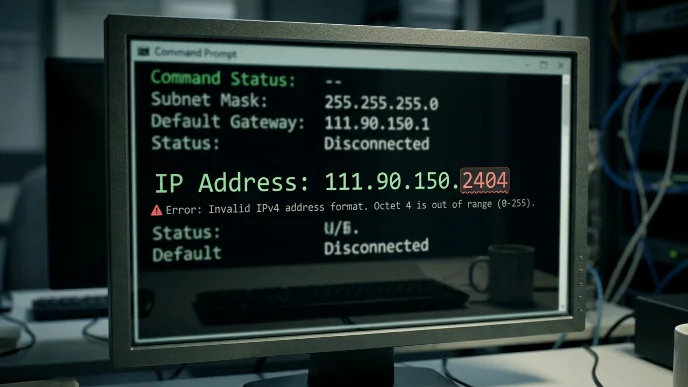
111.90.150.2404 is a malformed IP address that does not follow official IPv4 standards. A standard IPv4 address always contains four numerical sections separated by periods. Each section, commonly called an octet, must contain a value between 0 and 255. The sequence 111.90.150.2404 breaks this rule because the final segment, “2404,” is far larger than the maximum allowed value. As a result, networking systems immediately reject the address as invalid.
Many users mistakenly assume that any string of numbers separated by dots must represent a valid internet address. However, internet protocols rely on strict formatting rules to function correctly. Browsers, routers, DNS servers, and operating systems are designed to validate IP structures before processing requests. Since 111.90.150.2404 violates IPv4 formatting standards, it cannot route internet traffic or connect to servers. Even though it is invalid, the address continues appearing online because websites sometimes index malformed data from logs, analytics systems, or technical documentation.
How IPv4 Addressing Actually Works
IPv4, or Internet Protocol Version 4, is the traditional addressing system that powers most internet communication today. Every IPv4 address uses a 32-bit structure divided into four octets. These octets are written in decimal format and separated by dots to make them easier for humans to read and manage. Examples of valid IPv4 addresses include 192.168.1.1, 8.8.8.8, and 111.90.150.204.
Each octet in an IPv4 address must remain within the range of 0 to 255 because it represents an 8-bit binary number. Networking hardware and software convert these values into binary format internally for routing internet traffic. If an octet exceeds 255, the system cannot interpret it correctly. This is exactly why 111.90.150.2404 fails validation. The final section cannot fit within the required binary structure, making the address unusable for communication across local networks or the public internet.
Why 111.90.150.2404 Is Technically Invalid
The primary issue with 111.90.150.2404 is that the final octet exceeds the maximum IPv4 limit. Internet standards require every octet to remain within the 0–255 range. Since “2404” is significantly larger than 255, the address cannot be processed by routers, operating systems, browsers, or DNS servers. Most systems instantly return an “Invalid IP Address” error when users attempt to enter it into network tools or browsers.
This restriction exists because IPv4 relies on precise binary formatting for routing data packets correctly. Internet devices communicate using mathematical structures rather than human-readable text. When an address falls outside accepted parameters, the routing process fails immediately. Even a single incorrect digit can prevent successful communication between devices. This demonstrates how sensitive internet infrastructure is to formatting accuracy and why malformed addresses cannot function in real networking environments.
Why People Search for 111.90.150.2404
One reason users search for 111.90.150.2404 is simple curiosity. Many people encounter the number while browsing websites, reviewing logs, troubleshooting servers, or reading technical discussions online. Because the sequence resembles a standard IPv4 address, users naturally assume it may belong to a server, hosting provider, or public network system. Search engine visibility increases further once websites publish articles discussing the invalid address.
Another common cause is human error during networking tasks. Users configuring routers, game servers, DNS settings, VPNs, or hosting platforms sometimes mistype valid addresses accidentally. Similar-looking addresses such as 111.90.150.204 are legitimate, while 111.90.150.2404 is not. Online discussions frequently mention invalid addresses appearing because of typing mistakes, copy-paste errors, corrupted data logs, or software misconfigurations. These repeated incidents contribute to ongoing search interest around malformed IP addresses.
Common Invalid IP Address Errors
Invalid IP address errors are common in networking environments. When a device receives or enters a malformed address, internet communication usually fails immediately. Users may encounter messages such as “Invalid IP Address,” “Unable to connect,” or “Address not recognized.” These errors appear because networking systems validate IP formatting before attempting communication.
Online discussions across technical forums and Reddit communities show that invalid IP problems affect many users configuring routers, gaming servers, home networks, or internet-sharing systems. Some users report DHCP failures where devices receive incorrect network assignments, while others accidentally configure unsupported static IP values. In many situations, restarting routers, resetting DHCP settings, or correcting manually entered addresses resolves the issue. These real-world examples highlight how even small formatting mistakes can completely disrupt internet access.
The Difference Between Valid and Invalid IP Addresses
A valid IPv4 address follows strict structural rules. It contains exactly four numerical octets, and every octet remains within the range of 0 to 255. Valid addresses allow devices to communicate reliably across networks. Examples include 192.168.0.1, 10.0.0.1, and 111.90.150.204. These addresses can be assigned to routers, computers, servers, or public websites successfully.
Invalid IP addresses break one or more of these requirements. Some contain too many sections, while others include values outside the accepted range or non-numeric characters. Examples mentioned online include 111.90.150.282 and 111.90.150.204p. The first exceeds the allowed octet range, while the second contains a letter that invalidates the address format entirely. Networking systems reject such addresses because they cannot be interpreted correctly within internet routing protocols.
Security Risks Associated With Unknown IP Addresses
Cybersecurity professionals often monitor suspicious IP addresses because malicious activity on the internet frequently involves hidden servers, phishing systems, botnets, or malware distribution networks. Although 111.90.150.2404 itself is invalid, unfamiliar IP addresses should always be approached carefully. Entering unknown numeric addresses directly into a browser may expose users to unsafe websites or malicious downloads.
Many cybersecurity incidents begin with users interacting with unfamiliar links or server addresses without verification. Researchers studying internet infrastructure explain that attackers increasingly rely on rapidly changing hosting environments to avoid detection. Scam websites, fake login portals, and phishing campaigns often use obscure server configurations to trick users into revealing personal information. Because of this, internet users should verify unknown addresses through trusted security tools before interacting with them directly.
IP Addresses and Online Privacy
IP addresses are deeply connected to online identity and digital privacy. Every internet-connected device requires an IP address to communicate with websites and online services. Because IP addresses can reveal approximate geographic location and internet provider details, privacy experts continue debating whether IP addresses should legally qualify as personal data.
Research into privacy regulations shows that many organizations already treat IP addresses as sensitive information in privacy policies. Websites collect IP data for analytics, fraud prevention, geolocation, and advertising systems. As public awareness about online tracking grows, more users now rely on VPNs, encrypted DNS services, and privacy-focused browsers to reduce exposure. The increasing interest in strange IP-related searches like 111.90.150.2404 reflects growing public curiosity about how internet identification systems operate behind the scenes.
IPv4 Exhaustion and the Rise of IPv6
IPv4 has served as the foundation of internet communication for decades, but its limited address space has become a major challenge. Since IPv4 only supports around 4.3 billion unique addresses, the rapid expansion of smartphones, cloud computing, smart devices, and internet-connected technologies has accelerated address exhaustion worldwide.
To address this limitation, networking engineers introduced IPv6, a newer protocol designed with an enormously larger address space. IPv6 uses hexadecimal formatting and supports vastly more unique combinations than IPv4. Although IPv4 remains dominant today, IPv6 adoption continues growing steadily across internet infrastructure. Understanding IPv4 limitations helps explain why strict formatting rules remain critical and why malformed addresses like 111.90.150.2404 cannot function within modern networking systems.
Why Networking Knowledge Matters Today
Modern internet users interact with networking systems more than ever before. Home WiFi routers, gaming platforms, streaming devices, VPN applications, cloud servers, and smart home technologies all rely on IP-based communication. Because of this, even basic networking knowledge has become valuable for everyday digital literacy. Understanding IP structures can help users troubleshoot connectivity issues, configure routers properly, and recognize suspicious online behavior.
Invalid addresses like 111.90.150.2404 may appear harmless, but they demonstrate how precise internet systems must be to operate correctly. A single incorrect digit can break communication between devices, disrupt services, or cause confusion during troubleshooting. As cybersecurity awareness and internet usage continue expanding worldwide, understanding networking fundamentals will become increasingly important for both casual users and technology professionals.
Conclusion
111.90.150.2404 is not a valid IPv4 address because its final octet exceeds the allowed numerical range required by internet protocol standards. Although the address appears realistic at first glance, routers, browsers, DNS servers, and operating systems reject it immediately because it violates IPv4 formatting rules. Most appearances of the address online are likely caused by typing mistakes, corrupted logs, software errors, or misunderstandings about IP address structures.
Understanding why 111.90.150.2404 is invalid provides useful insight into how internet communication actually works. Learning about IPv4 formatting, networking protocols, cybersecurity awareness, online privacy, and IP validation helps users navigate digital systems more confidently while avoiding common technical mistakes. As internet technology continues evolving and more devices connect online every year, networking literacy will remain an essential skill for safe and effective digital communication.
