
Introduction
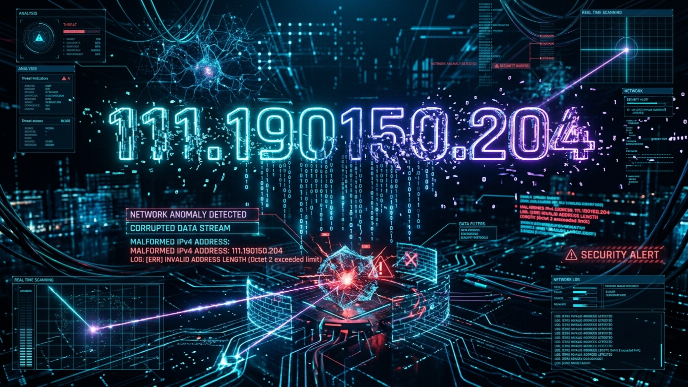
The sequence 111.190150.204 looks like an Internet Protocol (IP) address, but at first glance it appears irregular and technically inconsistent with standard networking rules. IP addresses are essential components of the internet, used to identify devices and enable communication between servers, routers, and users. However, not every number that resembles an IP format is actually valid or usable in real networking environments.
In modern digital systems, users often encounter malformed or unusual IP-like strings in logs, security tools, or network reports. This creates confusion and leads to online searches to understand whether the value is a real IP, a malicious indicator, or simply a system error. To properly analyze 111.190150.204 it is important to understand how IP addressing works, how such anomalies appear, and what they typically represent in real-world systems.
Understanding What 111.190150.204 Appears to Be
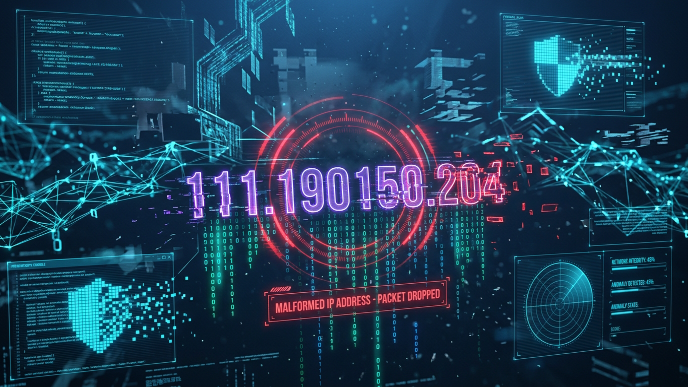
At first sight, 111.190150.204 resembles an IPv4 address, which normally consists of four numerical blocks separated by dots. However, a valid IPv4 address must follow strict rules, where each segment ranges from 0 to 255. In this case, the segment “190150” is far beyond the allowed limit, making the entire structure invalid in standard networking terms.
This suggests that the value is not a real IP address but likely a corrupted or incorrectly formatted entry. In real systems, such anomalies can occur due to logging errors, database concatenation issues, or software that incorrectly merges multiple fields into a single string. As a result, the final output looks like an IP address even though it does not function as one.
How Real IPv4 Addresses Are Structured
To understand why 111.190150.204 is invalid, it is important to understand how proper IPv4 addresses work. IPv4 is a 32-bit addressing system that divides an address into four octets separated by dots. Each octet represents a value between 0 and 255, allowing for approximately 4.3 billion unique addresses across the internet.
These addresses are assigned by global internet authorities through structured systems involving ISPs and regional registries. As explained in networking fundamentals, IP addresses are not random numbers but carefully managed identifiers used for routing and communication between devices across global networks.
Why Invalid IP-Like Values Such as 111.190150.204 Appear
The appearance of 111.190150.204 is usually the result of technical or formatting issues rather than an actual network entity. One common cause is data parsing errors, where software incorrectly merges separate values into a single string during logging or export. This is especially common in large-scale systems where millions of records are processed automatically.
Another possible reason is corrupted data in security logs or analytics tools. When systems fail to properly separate fields, numerical strings may combine and appear as valid IP formats. In some cases, anonymization processes also distort original IP data for privacy reasons, which can unintentionally produce invalid structures.
The Role of IP Addresses in Internet Communication
To fully understand the significance of something like 111.190150.204, it helps to understand the purpose of real IP addresses. An IP address acts as a digital identifier that allows devices to communicate over networks. It ensures that data packets reach the correct destination, similar to how a postal address directs mail.
Every time a user accesses a website, sends an email, or streams content, IP addresses are used behind the scenes to route information. These addresses serve two main roles: identifying the device and indicating its location within the network structure. Without IP addresses, modern internet communication would not function properly.
Misinterpretation of IP-Like Strings in Security Systems
Strings like 111.190150.204 are often misinterpreted when they appear in security dashboards or monitoring tools. Users may assume they represent real external threats or malicious sources. However, cybersecurity analysis requires strict validation to determine whether a value is actually a usable IP address or just malformed data.
Security professionals use specialized tools to verify IP structure, check registry databases, and analyze network behavior. As noted in IP lookup methodologies, real IP data includes ISP information, network ownership, and routing details, while invalid formats fail these checks entirely.
Data Corruption and Logging Errors in Network Systems
One of the most common explanations for 111.190150.204 is logging corruption. In large digital infrastructures, logs are generated continuously and often stored in structured formats like JSON or CSV. If formatting rules break during processing, multiple fields may merge incorrectly, producing invalid outputs that resemble IP addresses.
Such issues can also occur during system migrations, software updates, or encoding mismatches. While these errors do not necessarily indicate security threats, they are important for system administrators to investigate because they may point to deeper data integrity problems within the infrastructure.
Why IP Validation Matters in Modern Systems
Validation of IP formats is a critical part of network security and software development. A string like 111.190150.204 would be rejected by most modern systems because it does not conform to IPv4 standards. This validation prevents routing errors, data corruption, and potential exploitation of poorly designed systems.
IP validation also plays a role in cybersecurity defense. Malformed inputs can sometimes be used in injection attempts or to confuse weak filtering systems. For this reason, modern applications strictly enforce IP format rules before processing network data.
Conclusion
The identifier 111.190150.204 is not a valid IP address but rather an irregular or corrupted representation that resembles one. Its structure violates fundamental IPv4 rules, particularly in the second segment, making it unusable in real networking environments.
In most cases, such values arise from system errors, data formatting issues, or logging inconsistencies rather than representing actual devices or network activity. Understanding how IP addresses are structured and validated helps users correctly interpret such anomalies and avoid confusion when encountering them in logs or online systems.
